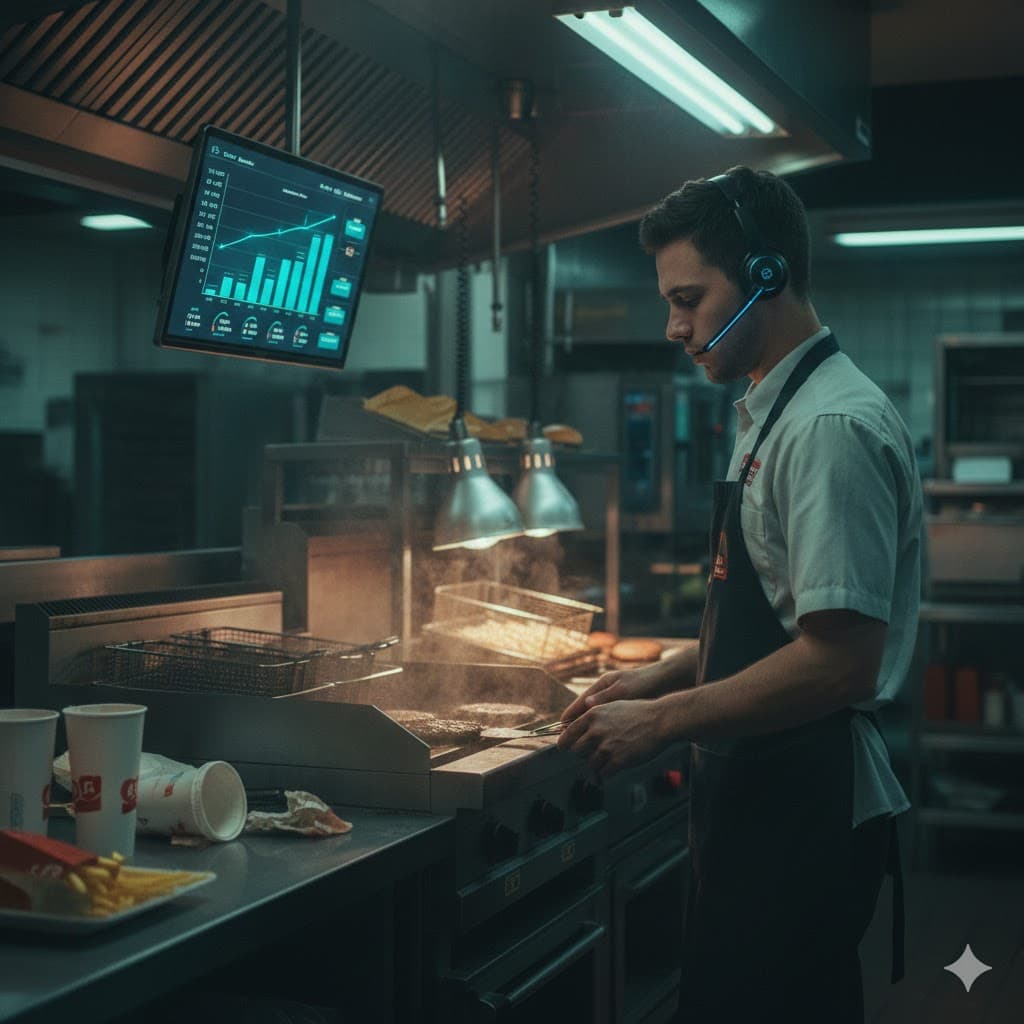
Burger King's 'Patty' AI: The Unsettling Rise of Real-Time Politeness Surveillance
Verified: 3/13/2026
The System Behind the Smile
Burger King's rollout of Patty, an AI chatbot integrated into cloud-connected headsets, isn't just another tech gimmick—it's a live experiment in embedding large language models directly into frontline service workflows. Powered by an OpenAI base model, this system operates as part of the BK Assistant platform, which unifies point-of-sale, inventory, and digital ordering into a single command center. In practice, it listens to drive-thru interactions from order to departure, analyzing audio for predefined keywords like "welcome," "please," and "thank you." The company insists it's about aggregating data to spot service patterns, not scoring individuals, but the technical implementation tells a more nuanced story.
How Patty Actually Works
Under the hood, this isn't just passive listening. The AI uses keyword spotting and likely some form of sentiment analysis to process conversations in real-time. It's designed to trigger alerts—for instance, notifying managers when items run out or helping workers recall ingredients for limited-time offers. But the core controversy lies in its friendliness metrics. By flagging specific politeness terms, it creates a feedback loop where human interaction becomes quantifiable data. This raises immediate questions about privacy, bias, and the pressure to perform under constant digital scrutiny.
"One of the ways that we started this was picking certain keywords... but it's one mechanism that was used to iterate on how to define friendliness." – Thibault Roux, Burger King's Chief Digital Officer
The Human Cost of Automated Hospitality
While Burger King frames Patty as a coaching tool, the backlash online highlights a deeper unease. Employees now face a system that monitors their tone and word choice, potentially enforcing a sanitized, script-like demeanor. This isn't just about efficiency; it's about shifting the dynamics of low-wage labor. In an industry already plagued by high turnover and stress, adding an AI overseer could exacerbate burnout, as workers feel judged not just by customers but by an opaque algorithm. The company's claim that it's "fundamentally human" rings hollow when the tech dictates what "human" sounds like.
- Real-time Monitoring: Listens continuously during customer interactions, from approach to departure.
- Keyword Analysis: Tracks terms like "please" and "thank you" to gauge friendliness patterns.
- Operational Alerts: Automatically updates menus and supports inventory management.
- Data Aggregation: Provides managers with insights, not individual scores, per company statements.
Architectural Implications and Risks
From a systems perspective, Patty represents a significant leap in deploying AI agents at scale. It's a closed-loop system where audio input drives operational decisions, but the risks are substantial. If the model misinterprets context—say, missing a "thank you" in a noisy environment—it could skew data unfairly. Moreover, storing and processing voice data introduces security vulnerabilities. Burger King assures limited listening, but once infrastructure is in place, scope creep is a real threat. This isn't just a Burger King issue; it's a blueprint for how retail and hospitality might evolve, prioritizing metrics over genuine human connection.
The broader takeaway? We're entering an era where AI-driven surveillance is becoming normalized in everyday jobs. Patty might start with politeness, but its underlying architecture enables far more invasive applications. As developers and architects, we need to ask: at what point does support become control? The answer will define not just fast food, but the future of work itself.