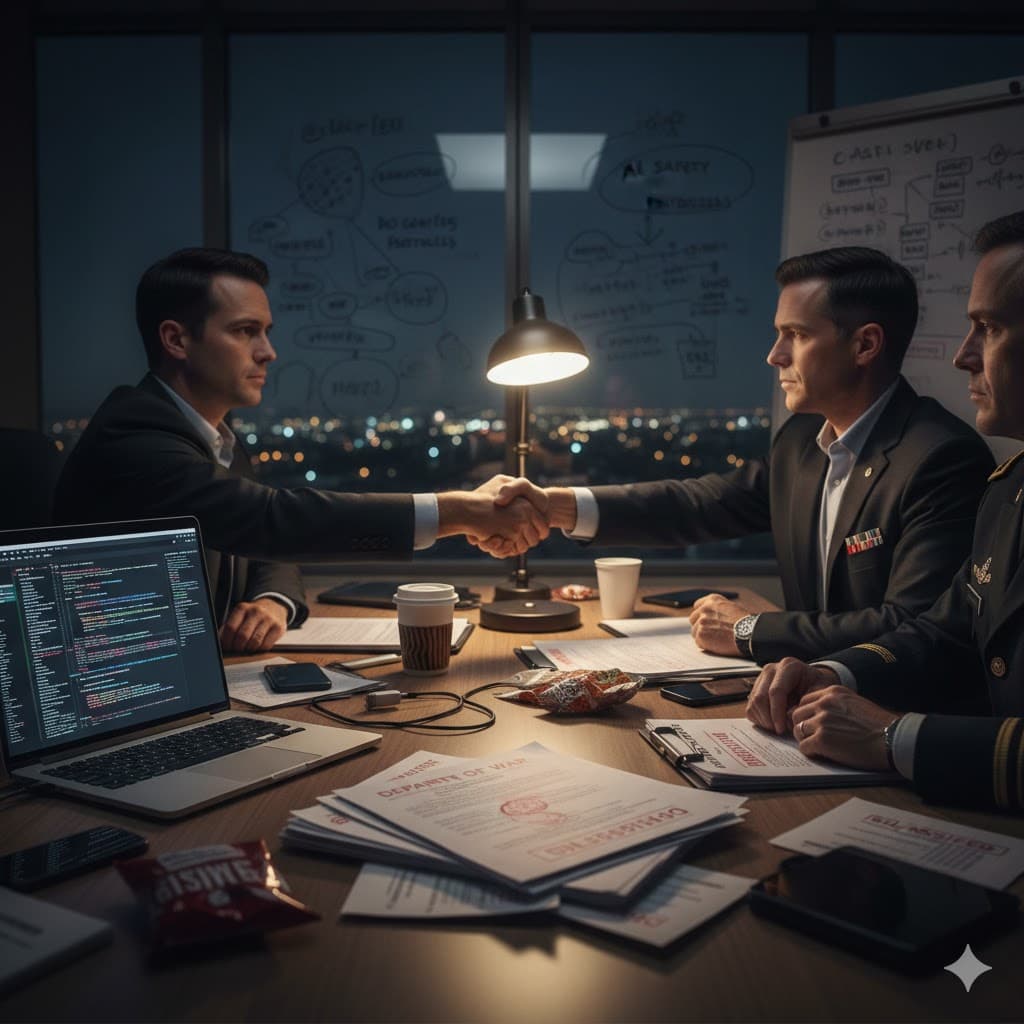
Anthropic's Military Standoff: When AI Safety Clashes with National Security
Verified: 2/28/2026
The Deal That Almost Wasn't
Late last night, Anthropic dropped a bombshell on X: they'd reached an agreement with the Department of War to deploy their models in classified networks. But this wasn't some smooth handshake deal. It came after Defense Secretary Pete Hegseth issued an ultimatum—grant unrestricted military use by Friday or lose all Pentagon business. Anthropic CEO Dario Amodei publicly refused, stating they "cannot in good conscience accede." The brinkmanship was real, with Hegseth threatening to designate Anthropic a "supply-chain risk to national security," effectively blacklisting them from federal contracts. In the end, a compromise emerged, but it's one built on explicit technical and ethical guardrails that redefine how AI enters defense systems.
What Anthropic Won't Budge On
At the core of this clash are two principles Anthropic treated as non-negotiable. First, a prohibition on domestic mass surveillance using their models. Second, ensuring human responsibility for the use of force, which explicitly rules out autonomous weapon systems. As the viral tweet states, "The DoW agrees with these principles, reflects them in law and policy, and we put them into our agreement." This isn't just lip service—it's codified into the contract. For a company obsessed with AI safety, these aren't optional features; they're the foundation of their mission to "serve all of humanity." The DoW's acceptance signals a rare moment where military pragmatism meets ethical tech advocacy.
"AI safety and wide distribution of benefits are the core of our mission. Two of our most important safety principles are prohibitions on domestic mass surveillance and human responsibility for the use of force."
The Technical Safeguards in Play
Beyond policy, Anthropic is implementing hard technical measures to enforce these principles. They mention deploying FDEs (likely Frontier Defense Engines or similar monitoring systems) to ensure model behavior aligns with safety protocols. Crucially, deployment will be on cloud networks only, not on-premise military hardware. This creates a controlled environment where:
- Real-time monitoring can detect misuse or drift.
- Updates and patches are centralized and auditable.
- Access is gated through secure, logged channels.
It's a systems-level approach to risk mitigation, treating the entire deployment pipeline as a security surface. The DoW wanted these safeguards too, suggesting a shared recognition that raw AI power without constraints is a liability.
Why This Sets a Precedent
Anthropic isn't just building for themselves; they're pushing the DoW to offer these same terms to all AI companies. This move could standardize ethical benchmarks across defense AI, preventing a race to the bottom on safety. With a $200 million prototype agreement already in place with the DOD's CDAO, Anthropic has leverage. Their work includes fine-tuning models on DOD data and collaborating on adversarial risk forecasting—expertise the military needs. By embedding principles into the deal, they're creating a template that balances innovation with accountability.
The Bigger Picture: AI's Role in National Security
This standoff reveals a tectonic shift in how AI integrates into national security. The Pentagon's collision with private AI firms is uncharted territory, testing post-WWII norms of military-industrial relations. As one CNBC report notes, "The battle between military and industry over AI is just getting started." Anthropic's stance—challenging Hegseth's authority in court if needed—shows tech companies are willing to fight for control over their creations. It's not just about contracts; it's about shaping the ethical architecture of future warfare.
Looking ahead, this agreement could de-escalate tensions, moving away from legal battles toward collaborative frameworks. But the messiness isn't over. Anthropic's commitment to "reasonable agreements" must navigate a world that's "complicated, messy, and sometimes dangerous." Their success or failure here will ripple across Silicon Valley and Washington, setting the playbook for the next decade of AI in defense.